Where to Buy Top Leather Office Chairs in China?
Finding reliable Leather Office Chairs in China requires more than comparing catalog prices. The right supplier should combine material knowledge, ergonomic design, stable production, and transparent communication. Buyers can explore established furniture markets in Foshan, Anji, and Shanghai, where manufacturers often display executive chairs, high-back models, and conference seating. Each region has different strengths. Foshan is known for office furniture production, while Anji has strong chair manufacturing experience.
Start with the leather itself. Ask whether the chair uses full-grain leather, top-grain leather, split leather, or a synthetic alternative. A clear specification should mention thickness, surface treatment, foam density, base material, and weight capacity. It should also identify the mechanism, such as tilt control or adjustable lumbar support. Small details matter. A smooth seam is not enough.
Request samples before placing a large order. Sit for at least twenty minutes and check whether the lumbar area supports your lower back. Test the casters on a hard floor. Listen for clicking, uneven movement, or looseness in the armrests. Independent inspection can verify dimensions, packaging, materials, and basic safety performance. Certifications or test reports should be checked carefully, not accepted as decoration.
Reliable suppliers usually provide factory videos, detailed quotations, production photographs, and clear warranty terms. Confirm minimum order quantities, customization limits, lead times, export packaging, and after-sales support. Mistakes still happen. Color may vary slightly between batches, and a beautiful sample may hide weak internal parts. Careful questions, written specifications, and a pre-shipment inspection reduce those risks. The cheapest chair is rarely the least expensive choice over several years.
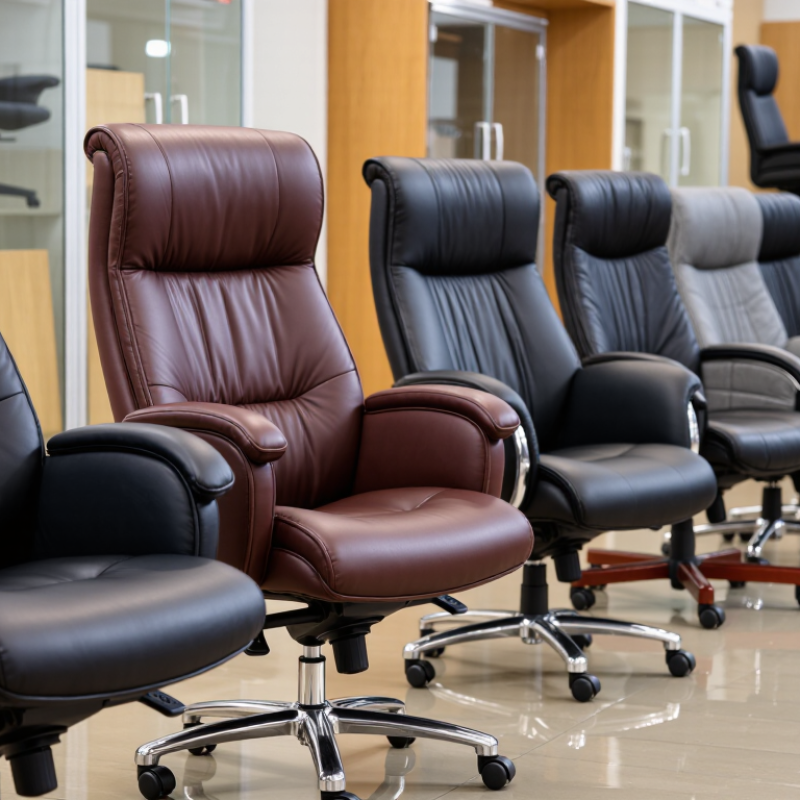
Types of Leather Office Chairs Available in China
China offers several leather office chair types, and each suits a different working environment. Full-grain leather keeps the natural grain and usually develops a richer appearance over time. It feels firm at first, but becomes more comfortable with use. Top-grain leather is smoother and more consistent. It often suits executive offices and meeting rooms.
Split leather costs less, although it may feel less breathable. Bonded leather combines leather fibers with other materials. Its surface can look attractive, but heavy daily use may reveal cracking sooner. Many Chinese suppliers also offer microfiber leather, a synthetic material with consistent color and easier maintenance. It can be a practical choice for shared offices. Not all synthetic leather feels cheap.
When checking chairs in Chinese furniture markets, showrooms, or online supplier catalogs, I examine the material label closely. “Leather chair” alone tells me very little. I request a sample, close-up photos, abrasion data, and details about the foam density. I also test the reclining mechanism, five-star base, casters, and lumbar support. A chair may look impressive but still have weak stitching. That mistake is easy to make. Reliable suppliers should provide clear specifications, inspection records, and warranty terms. Buyers should also confirm seat width, desk clearance, and climate suitability before ordering. A cool showroom does not represent every office in China.
Key Features to Consider Before Buying a Leather Office Chair
Where to Buy Top Leather Office Chairs in China?
A good leather office chair starts with the leather, but comfort depends on more than appearance. Ask whether the cover is full-grain, top-grain, or bonded leather. These materials age differently. Full-grain leather may develop natural marks, while bonded leather can peel under heavy daily use. That detail matters.
Test the chair for at least fifteen minutes before ordering in quantity. Check whether the lumbar support stays firm when you lean back. The seat should support your thighs without pressing behind your knees. A waterfall seat edge helps circulation. Small adjustments matter.
Do not ignore the internal structure. A steel base, smooth casters, and a tested tilt mechanism usually improve long-term reliability. Ask for the foam density and load rating in writing. Measurements should include seat height, width, and armrest clearance. Your desk may look suitable, but the armrests can still collide with it.
When sourcing from Chinese manufacturers, request material samples and a complete product specification sheet. Inspect stitching around the corners and stress points. Uneven seams are easy to miss in photographs. A pre-shipment inspection can reveal loose screws, odor, or damaged surfaces. Factory claims are useful, but independent checks feel safer.
I once preferred a softer cushion because it felt luxurious in the showroom. After several hours, it caused poor posture. My first judgment was wrong. Consider warranty terms, replacement parts, packaging strength, and delivery conditions before approving a purchase. A beautiful chair is not automatically a dependable chair.
Where to Buy Top Leather Office Chairs in China? - Key Features to Consider Before Buying a Leather Office Chair
The chart shows practical ergonomic specification ranges for screening leather office chairs. Adjustable seat height should support proper foot contact with the floor, while seat depth, backrest height, and armrest height should match the user's body size. When comparing suppliers in China, also verify leather quality, foam density, stitching, base strength, tilt-test results, and product compliance documentation.
Benchmark ranges are shown in centimeters and are intended as general ergonomic buying guidance rather than brand-specific specifications.
Top Places to Buy Leather Office Chairs in China
China offers several strong sourcing hubs for leather office chairs, but each serves a different buying purpose. Foshan and Guangzhou are practical choices for factory visits, custom dimensions, and container orders. Shenzhen suits buyers seeking export experience and faster sample development. Shanghai is better for commercial showrooms, contract furniture suppliers, and premium office projects. Yiwu can help with small accessories, but it is less suitable for large chair production.
The 2024 CSIL World Office Furniture report identifies China as one of the world’s largest office furniture production bases. Grand View Research also reports continued growth in the global office furniture market, driven by hybrid work and ergonomic demand. These trends support buying directly from established manufacturing clusters. However, “leather” can mean full-grain leather, corrected-grain leather, or synthetic polyurethane. The difference is substantial. Ask for material specifications, abrasion results, foam density, and the BIFMA test status before comparing prices. A cheap chair may become expensive after six months.
Tips: Visit at least two factories. Sit for 30 minutes. Check stitching, caster movement, recline noise, and underside construction. Request a written sample approval and inspect one production chair before shipment. I would not trust showroom appearance alone; lighting can hide uneven grain and weak seams. Also confirm packaging measurements, replacement-part support, and warranty terms in writing. Fancy leather is not always better.
How to Evaluate Chinese Chair Suppliers and Manufacturers
Where to Buy Top Leather Office Chairs in China?
Finding a reliable Chinese chair supplier requires more than browsing attractive product photos. Start with manufacturers that provide a verifiable factory address, production details, and clear business documentation. Ask whether they make chairs in-house or outsource key components. This distinction affects quality control, lead times, and accountability.
Request a physical sample before placing a large order. Inspect the leather grain, stitching tension, foam recovery, frame welds, and wheel movement. Genuine leather should have consistent texture without appearing unnaturally perfect. Ask for material specifications, test reports, warranty terms, and packaging photos. A trustworthy supplier answers directly and records agreed details in a formal quotation.
Visit the factory when possible. Observe cutting tables, sewing stations, assembly lines, and inspection records. If travel is difficult, arrange a live video audit with random production areas. Check whether workers follow repeatable inspection procedures. Ask how defects are handled, not just how products are advertised. The best supplier may admit limitations.
I once trusted a polished sample too quickly. The bulk shipment exposed uneven armrests. That mistake changed my evaluation process. Now I compare several samples, confirm tolerances, and request pre-shipment inspection. Price still matters, but unusually low pricing may signal thinner leather, weaker mechanisms, or reduced testing. Discuss minimum order quantities, spare parts, payment stages, and delivery schedules in writing. Reliable communication is part of product quality.
Ordering, Delivery, and After-Sales Support in China
Where to Buy Top Leather Office Chairs in China?
When ordering a leather office chair in China, verify the seller before comparing prices. The China Furniture Association reported industry revenue of about RMB 655.7 billion in 2023. This large market includes excellent factories and inconsistent workshops. Ask for a business license, factory address, material specification, and recent inspection photos.
Request a written quotation with leather grade, foam density, frame material, dimensions, and packaging details. The chair should meet applicable Chinese office-chair requirements, including QB/T 2280-2016 where relevant. Confirm whether “leather” means full-grain, top-grain, split leather, or synthetic material. A small sample can reveal coating cracks and strong chemical odors. It cannot reveal long-term comfort.
Delivery terms deserve equal attention. Confirm production time, carton size, gross weight, delivery address, and damage procedures before payment. China’s National Bureau of Statistics recorded online retail sales of physical goods at RMB 13.02 trillion in 2023, showing the scale of domestic e-commerce logistics. However, furniture still needs careful handling. Photograph the cartons before opening them. Record damaged corners immediately.
After-sales support should state the warranty period and excluded conditions. Ask who pays for replacement parts, local transport, and technician visits. Keep the invoice, order chat, and assembly guide. Some sellers promise rapid support but respond slowly after delivery. That happens. A practical trial period, clear return rules, and spare casters included in writing can reduce disputes. Expect small imperfections. Judge whether the seller fixes them professionally.