



China Top Textile Machinery Manufacturers and Suppliers
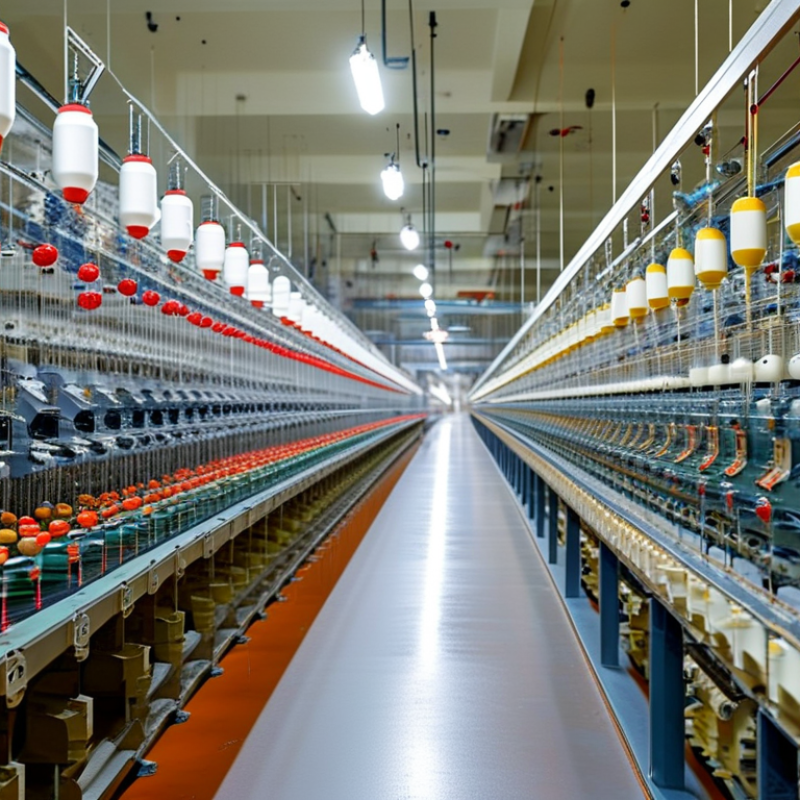
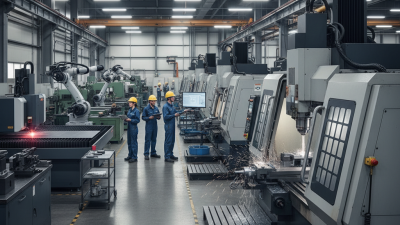
China has become a central manufacturing base for textile machinery, serving spinning, weaving, knitting, dyeing, finishing, and nonwoven production. Its suppliers range from large export-oriented groups to specialized factories producing compact spinning systems, rapier looms, circular knitting machines, and intelligent dyeing equipment. Factory floors often reveal the difference: clean assembly lines, automated testing stations, and digital dashboards tracking vibration, temperature, and energy use.
The ITMF International Textile Machinery Shipment Statistics 2023 and 2024 show uneven global demand across spinning, weaving, knitting, and finishing equipment. Their findings also indicate continuing investment in automation, productivity, and resource efficiency. China remains highly visible in these shipment patterns, particularly in spinning and knitting machinery. However, shipment volume alone cannot prove quality. Service response, spare-parts availability, software compatibility, and factory acceptance testing deserve equal attention.
As Thomas Waldmann, Managing Director of VDMA Textile Machinery, stated, “Sustainability is becoming a decisive factor in textile machinery investment.” That observation is increasingly practical. Buyers now compare electricity consumption, water recovery, production stability, and lifecycle support before signing contracts. China’s leading manufacturers are responding with sensor-based monitoring, remote diagnostics, and lower-waste process designs. Still, no ranking is perfect. Product claims should be checked against test records, certifications, customer references, and independent audits. This guide examines China’s top textile machinery manufacturers and suppliers through those practical standards. It considers technical capability, export experience, customization, maintenance support, and measurable operating performance. The strongest supplier may not be the cheapest. It may be the one that keeps a weaving line stable at 2 a.m.
China’s Textile Machinery Industry: Scope and Development
China’s textile machinery industry covers spinning, weaving, knitting, dyeing, finishing, nonwoven, and testing equipment. Its scope reaches from individual machines to complete production lines. Factory assessments often reveal a practical focus: stable output, easier maintenance, and lower energy use. The change is visible.
Modern workshops increasingly use sensors to track vibration, temperature, yarn breaks, and production speed. Digital monitoring helps technicians identify faults before a full shutdown occurs. Automated material handling also reduces repetitive work and improves workflow consistency. However, older equipment still operates in many factories, creating uneven development across the sector.
Environmental performance is becoming a central development goal. Manufacturers are improving heat recovery, water circulation, dust control, and motor efficiency. Dyeing and finishing equipment require especially careful process control because small temperature changes can affect fabric quality. Compliance records, operator training, spare-part availability, and testing procedures remain important when evaluating suppliers. Not every upgrade works. Some factories install digital systems without training staff properly, so useful data remains unused. This gap deserves more attention. Reliable development depends on measurable performance, transparent technical documentation, and support throughout the machine’s working life. Industry progress should be judged by dependable production, safer operations, and verified resource savings rather than impressive specifications alone.
| Industry Segment | Representative Machinery | Primary Textile Process | Typical Downstream Applications | China Industry Scope and Position | Current Development Direction | Key Performance Indicators |
|---|---|---|---|---|---|---|
| Spinning Machinery | Blow-room lines, carding machines, draw frames, combers, roving frames and ring-spinning systems | Fiber opening, cleaning, carding, drafting and yarn formation | Cotton yarn, blended yarn, wool-type yarn and regenerated-fiber yarn | One of the largest equipment categories in China’s textile machinery sector, supported by a large domestic spinning base and a broad export market. | Higher automation, intelligent process control, energy reduction and compatibility with recycled and regenerated fibers | Spindle speed, production rate, yarn evenness, end-breakage rate, labor requirement and energy consumption per kilogram of yarn |
| Open-End and Air-Jet Spinning | Rotor-spinning machines and air-jet spinning machines | Direct yarn formation from drafted fiber strands | Denim yarn, coarse and medium-count yarn, home textiles and selected technical textile products | Important supplementary technologies to ring spinning, particularly where productivity, labor efficiency or specific yarn characteristics are required. | Higher rotor or jet speeds, automatic piecing, wider material compatibility and lower operating labor | Yarn count range, rotor or jet speed, piecing quality, productivity, yarn strength and power consumption |
| Texturing Machinery | False-twist texturing machines, air-texturing machines and related winding systems | Adding bulk, stretch, elasticity or a modified surface structure to filament yarn | Sportswear, hosiery, seamless garments, upholstery and home textiles | Closely linked to China’s large polyester-filament and man-made-fiber processing capacity. | High-speed production, digital tension control, flexible small-batch operation and reduced compressed-air consumption | Processing speed, yarn tension stability, crimp uniformity, defect rate and compressed-air use |
| Weaving Machinery | Air-jet looms, rapier looms, water-jet looms and preparation equipment | Interlacing warp and weft yarns to produce woven fabric | Apparel fabrics, household fabrics, industrial fabrics and automotive textiles | A mature and highly diversified segment serving both mass-market fabrics and specialized industrial applications. | Higher insertion rates, electronic let-off and take-up, reduced noise, lower water use and integration with production monitoring | Weft-insertion rate, fabric width, weaving efficiency, stop frequency, energy use and fabric defect rate |
| Knitting Machinery | Circular knitting machines, flat knitting machines, warp knitting machines and computerized knitting systems | Forming fabric by interlooping yarns | Knitwear, underwear, sportswear, socks, footwear uppers, mesh and technical fabrics | China has a broad manufacturing and application ecosystem covering apparel, home textiles and technical knitted structures. | Shorter sampling cycles, digital pattern control, seamless production, higher gauge precision and lower material waste | Machine gauge, cylinder or working width, production speed, stitch accuracy, pattern capacity and fabric uniformity |
| Nonwoven Machinery | Spunbond, meltblown, spunmelt, needle-punch, thermal-bonding and spunlace production lines | Producing textile webs without conventional yarn formation and weaving | Filtration media, medical and hygiene products, geotextiles, automotive materials, construction materials and agriculture fabrics | A strategically important segment because nonwovens support medical, environmental, infrastructure and industrial applications. | Higher filtration performance, lighter basis weight, recycled-fiber processing, process integration and application-specific customization | Line speed, basis-weight range, web uniformity, filtration efficiency, tensile strength and production yield |
| Dyeing and Finishing Machinery | Jet dyeing machines, overflow dyeing machines, continuous dyeing ranges, stenters and compacting machines | Coloration, washing, drying, heat setting, shrinkage control and surface finishing | Knitted fabrics, woven fabrics, denim, functional fabrics and home-textile materials | A major area for energy, water and chemical-efficiency improvements because wet processing is resource intensive. | Low-liquor-ratio processing, heat recovery, wastewater reduction, automated chemical dosing and digital recipe management | Liquor ratio, water consumption, steam or thermal-energy use, color difference, process time and reprocessing rate |
| Fiber and Filament Machinery | Polymer spinning systems, melt-spinning lines, staple-fiber lines and filament winding equipment | Converting polymers or prepared feedstocks into staple fibers and continuous filaments | Polyester, nylon, polypropylene, regenerated fibers and performance-oriented filament products | Closely connected with China’s extensive man-made-fiber production chain and large-scale chemical-fiber processing capacity. | Direct spinning, recycled feedstock use, bio-based materials, high-strength fibers and lower unit energy consumption | Throughput, spinning speed, denier or linear density, filament uniformity, intrinsic viscosity control and energy consumption |
| Garment and Sewing Machinery | Lockstitch machines, overlock machines, automatic cutting systems, spreading machines and sewing workstations | Fabric preparation, cutting, joining and garment assembly | Apparel, footwear, bags, household products and selected industrial sewn goods | A large application segment benefiting from China’s extensive apparel manufacturing, export and domestic-consumption markets. | Automation of repetitive operations, machine vision, digital production scheduling and flexible manufacturing cells | Stitching speed, cutting accuracy, line balancing, changeover time, first-pass yield and labor productivity |
| Technical Textile Machinery | Coating lines, laminating equipment, composite-forming systems, braiding machines and high-performance-fiber processing equipment | Manufacturing textile structures for performance rather than mainly for appearance | Filtration, transport, construction, protective equipment, medical products, aerospace and renewable-energy applications | One of the industry’s key growth areas as demand expands for functional, durable and lightweight textile materials. | High-strength materials, multifunctional coatings, composite integration, precision control and application-specific engineering | Tensile strength, tear resistance, coating uniformity, permeability, dimensional stability and service-life performance |
| Automation and Digital Systems | Industrial controllers, machine-vision systems, manufacturing execution systems, sensors and predictive-maintenance platforms | Monitoring, control, traceability and optimization across textile production lines | Spinning mills, weaving plants, knitting factories, dye houses and garment production facilities | Increasingly integrated into new equipment and retrofit projects as manufacturers pursue smart-factory capability. | Industrial Internet connectivity, real-time quality analysis, digital twins, remote diagnostics and artificial-intelligence-assisted maintenance | Data availability, system uptime, response time, defect detection accuracy, overall equipment effectiveness and maintenance cost |
| Sustainability and Circular-Textile Equipment | Fiber-opening and recycling systems, fabric shredders, solvent or water-saving dyeing systems and energy-recovery equipment | Recycling, resource efficiency, waste reduction and lower-impact textile processing | Recycled fiber, regenerated yarn, reused fabric, low-impact finishing and closed-loop production | A developing strategic segment supported by circular-economy policies, resource-efficiency targets and international sustainability requirements. | Improved fiber quality after recycling, traceability, low-carbon operation, reduced water use and integration with existing production lines | Recovery rate, recycled-material purity, fiber-length retention, water saving, energy saving and carbon intensity |
| Regional Manufacturing and Supply-Chain Features | Complete production lines, modules, spare parts, control systems and process-engineering services | Equipment design, component manufacturing, system integration, installation and after-sales support | Domestic textile clusters and export-oriented production bases across Asia, Europe, Africa and the Americas | Industrial activity is concentrated in established textile and machinery clusters, with extensive component, engineering and service networks. | Faster delivery, modular design, localized service, export compliance and integration of mechanical, electrical and software functions | Localization rate, delivery cycle, spare-parts availability, installation time, service response and total cost of ownership |
Related Posts
-

Top Textile Machinery Innovations Transforming the Industry Now?
-
Essential Tips for Buying Textile Machinery in 2026
-
Heavy Construction Equipment Tips for Global Buyers?
-
How to Choose the Right Metal Working Machines for Your Projects
-

Why Choose an Equipment Trader: Benefits for Buyers and Sellers in Construction
-
Why Are Machine Tools Essential for Modern Manufacturing?