

Buying a Motor Rotor Shaft requires more than comparing prices and diameter charts. The shaft carries torque, supports the rotor, and must survive repeated heat and vibration. A small dimensional error can create noise, imbalance, or premature bearing failure.
Dr. Ion Boldea, a recognized electric-machine researcher, offers a useful engineering reminder: “Every motor design is a compromise between performance, reliability, and cost.” That principle also applies to purchasing. Buyers should examine material grade, tensile strength, hardness, runout, keyway accuracy, surface finish, and heat-treatment records. Ask how the supplier controls concentricity. Request inspection reports, not promises. Confirm whether dimensions follow the required drawing or a recognized tolerance standard. Details matter.
The seven tips in this guide focus on practical decisions. They cover application loads, shaft material, machining quality, balancing, corrosion protection, supplier capability, and total cost. A bright surface is not proof of quality. Neither is a low quotation. Look closely at the bearing seats, shoulders, threads, and transition radii. These areas often reveal weak machining control. Do not trust appearance alone.
There is also room for honest doubt. A technically perfect Motor Rotor Shaft may still be unsuitable if the fit, speed, or load calculation is wrong. Recheck the operating conditions. Discuss unclear points with a qualified mechanical or motor engineer. That extra conversation may feel slow. It can prevent an expensive replacement, production stoppage, and a failure that appears without warning.
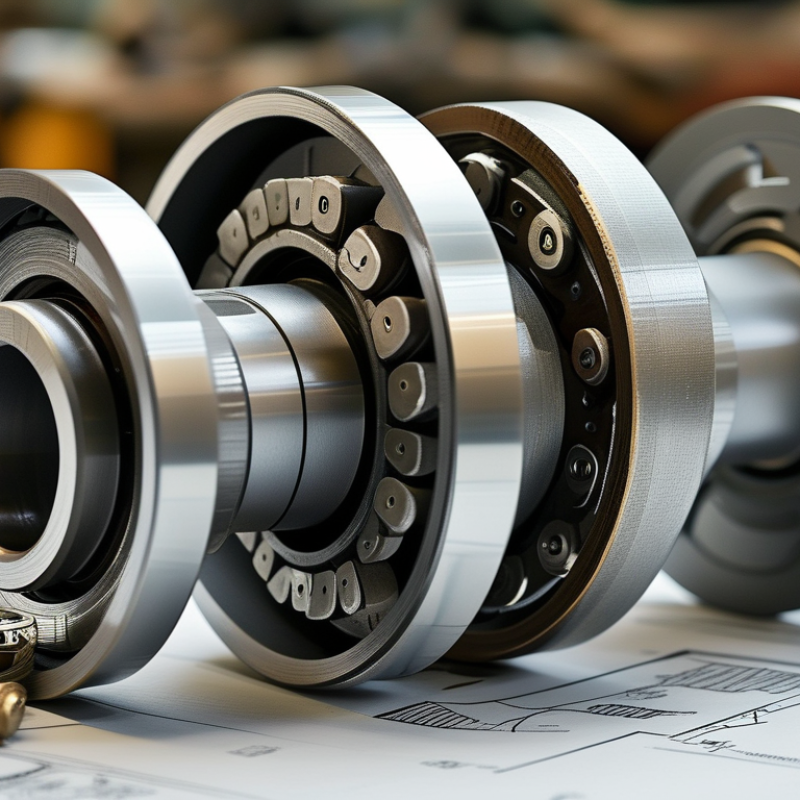
Before buying a motor rotor shaft, define its job in the complete motor system. A shaft for a high-speed spindle faces different demands than one for a conveyor motor. Identify torque, rotational speed, radial load, axial load, and duty cycle. Fit matters.
Check how the shaft connects to bearings, couplings, gears, and the rotor core. These interfaces determine diameter, keyway design, shoulder location, and allowable runout.
A small dimensional error can create vibration, heat, and premature bearing wear. Do not guess. Use the motor drawing and measured components together.
Material selection should match the operating environment. Consider fatigue strength, corrosion exposure, temperature, surface hardness, and machining quality. For continuous operation, balance quality deserves close attention. Even a strong shaft can fail when imbalance produces repeated stress at high speed.
Ask for inspection records, dimensional tolerances, material information, and balancing results. Reliable suppliers should explain how they verify these details.
One common mistake is choosing by diameter alone. I have seen specifications that looked suitable until the coupling length or shoulder position caused installation trouble. That part needs more thought.
Confirm service conditions, maintenance access, and replacement compatibility before approving the shaft.

7 Tips for Buying a Motor Rotor Shaft?
A rotor shaft is not interchangeable simply because its diameter looks correct. Measure the journal, bearing seats, shoulder locations, keyway, thread, and overall length. ISO 286-2 defines standard tolerance classes for shafts and holes, helping engineers select suitable fits. A loose fit may cause fretting. An overly tight fit can damage bearings during assembly.
Check drawings against the actual motor housing. Shaft runout and concentricity matter, especially at high speed. ISO 1101 provides guidance for geometric tolerances, while ISO 21940 addresses rotor balancing. The correct balance grade depends on speed and application. Do not copy a previous value blindly. It happens.
The U.S. Department of Energy’s Motor Systems Market Assessment estimates motor-driven equipment uses about 23% of U.S. electricity. Small alignment errors can therefore create significant operating losses across large installations. Verify steel grade, heat treatment, torsional strength, and surface hardness with traceable inspection records. I have seen shafts pass a diameter check but fail because the keyway was misplaced by a few millimeters. Confirm mechanical compatibility with the rotor stack, coupling, bearings, seals, and retaining hardware. Request a dimensional inspection report, material certificate, and balance record before approval. Check the revision number. It is easy to miss.
7 Tips for Buying a Motor Rotor Shaft
Material selection controls strength, weight, and service life. Medium-carbon steel suits many general motor applications. Alloy steel may perform better under heavy torque or repeated shock. Stainless steel helps resist moisture, but it may cost more and need careful machining. Ask for the material certificate, not just a verbal grade. Check tensile strength, yield strength, and chemical composition. A shaft can look excellent and still fail under cyclic loading.
Heat treatment changes the shaft’s internal performance. Quenching and tempering can improve strength and toughness when properly controlled. Case hardening may protect bearing seats from wear while keeping the core less brittle. Request hardness readings from several locations. One reading is not enough. Also review distortion limits after treatment. I have seen shafts meet hardness targets but miss the required runout. That mistake creates vibration later. Specify straightness, concentricity, and balancing requirements before production begins.
Surface finish matters where bearings, seals, and laminations contact the shaft. A polished journal reduces friction, but excessive polishing can remove essential dimensions. Confirm roughness values for each functional area. Inspect for grinding burns, scratches, and sharp shoulders. Protective plating or coating may help against corrosion, but thickness can affect fit. Ask how the finish will be measured and recorded. Do not rely on appearance alone. My own preference is a documented inspection plan, although it sometimes feels slower than necessary. It usually prevents expensive rework.
Buying a rotor shaft is not a catalog decision. Check dynamic balance at the shaft’s actual operating speed, not only at low speed. ISO 21940-11 provides balance-grade guidance for rotating components. Request the measured residual unbalance and test speed. Small errors become serious vibration at high revolutions. Confirm shaft strength under combined bending and torsional loads. Tensile strength alone is not enough. Ask for fatigue calculations, material certificates, and heat-treatment records.
Inspect the keyway, shoulders, fillets, and bearing journals closely. Sharp transitions create stress concentrations. A polished shaft can still fail at a poorly designed keyway. Surface hardness, finish, and corrosion resistance should match the load and environment. The U.S. Department of Energy’s Motor Systems Market Assessment reports that motor-driven equipment consumes about 23% of U.S. electricity. That scale makes premature shaft failure expensive, even when the component looks modest.
Match the shaft to speed, torque, temperature, duty cycle, and installation alignment. Check resonance margins, overspeed requirements, and vibration limits under real loads. IEC 60034-14 offers guidance for motor vibration evaluation. Consider dust, moisture, chemicals, and frequent starts. Ask how runout will be measured after machining. Do not rely on a generic “balanced” statement. I have seen specifications that looked complete but omitted the inspection method. That omission matters. Require dimensional reports, non-destructive inspection where appropriate, and clear acceptance criteria before purchase.
Buying a motor rotor shaft requires more than checking steel grade and unit price. Measure journal diameter, surface roughness, straightness, and runout against the drawing. A practical inspection should include hardness mapping and dynamic-balance results. Ask for material certificates, heat-treatment records, and full batch traceability. One small defect can create vibration, bearing wear, and costly field returns. A perfect-looking shaft can still fail.
Supplier reliability deserves equal attention. Review process capability data, calibration records, and corrective-action history. Confirm whether the supplier can maintain tolerances during peak production, not only during a sample run. The U.S. Department of Energy reports that motor-driven equipment consumes more than half of U.S. manufacturing electricity, so small efficiency losses can become major operating costs. Compare suppliers using total cost: purchase price, inspection, scrap, freight, inventory, downtime, and warranty exposure. The International Energy Agency also identifies motor systems as a major share of global electricity demand. That makes rotor geometry and balance commercially important, not merely technical details. Cheap is sometimes expensive.
Request a pilot lot before signing a long-term agreement. Check shafts after machining, coating, transport, and assembly. I would not rely on one acceptance report; sampling can miss a recurring issue. Ask for realistic lead times, capacity evidence, and a written escalation path. Two qualified sources may cost more initially, but one interrupted line may cost far more. Industry reports guide decisions, yet your own failure data should challenge them.
| Tip | Assessment Dimension | What to Verify | Practical Benchmark or Evidence | Key Questions for the Supplier | Red Flags | Suggested Priority |
|---|---|---|---|---|---|---|
| 1 | Confirm the technical specification | Review shaft material, diameter, length, tolerances, keyways, splines, threads, runout, surface finish, heat treatment, and balancing requirements. | Use a controlled drawing and revision number. Critical dimensional tolerances should be explicitly identified rather than assumed. | Can you manufacture from our latest drawing? Which characteristics will be treated as critical-to-quality? | Quotation is based only on a general description such as “steel rotor shaft,” with no drawing review. | High |
| 2 | Evaluate material traceability | Check the steel grade, chemical composition, mechanical properties, heat-treatment condition, and traceability from raw material to finished part. | Request a material certificate and heat-treatment record for each production lot. Certificate details should match the purchase specification. | Is the material heat or batch number marked and traceable? Can you provide test certificates with the shipment? | Material substitutions are allowed without written approval, or documentation is unavailable after production. | High |
| 3 | Inspect machining accuracy | Assess concentricity, cylindricity, straightness, bearing-seat dimensions, keyway or spline geometry, and surface roughness. | Require a dimensional inspection report covering all critical features. Bearing seats commonly require tight dimensional control and appropriate surface finish according to the application drawing. | Which calibrated equipment is used for shaft diameter, runout, and surface roughness inspection? | Only visual inspection is offered, or inspection results are recorded without actual measured values. | High |
| 4 | Verify balancing and functional testing | Confirm dynamic balancing requirements, balance grade, test speed, vibration limits, and any rotor assembly or overspeed testing needs. | Specify the applicable balance grade and test conditions in the purchase order. The result should include correction locations, residual unbalance, speed, and acceptance criteria. | Do you perform dynamic balancing in-house? Will the report identify test speed and residual unbalance? | Balancing is treated as optional even when the shaft is part of a high-speed rotating assembly. | High |
| 5 | Assess process control and quality systems | Review inspection planning, process capability, nonconformance handling, corrective actions, calibration, and change control. | Look for documented quality procedures, calibrated inspection equipment, first-article inspection, and lot-based final inspection. | How are out-of-tolerance parts controlled? What is your procedure for approving process or material changes? | The supplier cannot explain how rejected parts are segregated or how recurring defects are prevented. | High |
| 6 | Measure supplier reliability | Evaluate production capacity, lead-time consistency, communication, packaging, delivery performance, and business continuity. | Request recent on-time-delivery data, realistic sample and production lead times, and a documented escalation contact. | What is your normal production capacity? How are urgent quality or delivery issues escalated? | The supplier promises unusually short lead times without confirming capacity, tooling, material availability, or inspection resources. | Medium |
| 7 | Calculate total cost of ownership | Compare unit price with tooling, sampling, testing, packaging, freight, duties, inspection, scrap, rework, downtime, and warranty exposure. | Use a landed-cost model and compare at least three scenarios: prototype, low-volume production, and recurring production. | Which costs are excluded from the quotation? What are the replacement, warranty, and rework terms? | The lowest unit price excludes inspection reports, special packaging, balancing, tooling, or transportation costs. | High |
